I Was the Only Creative on an AI Panel
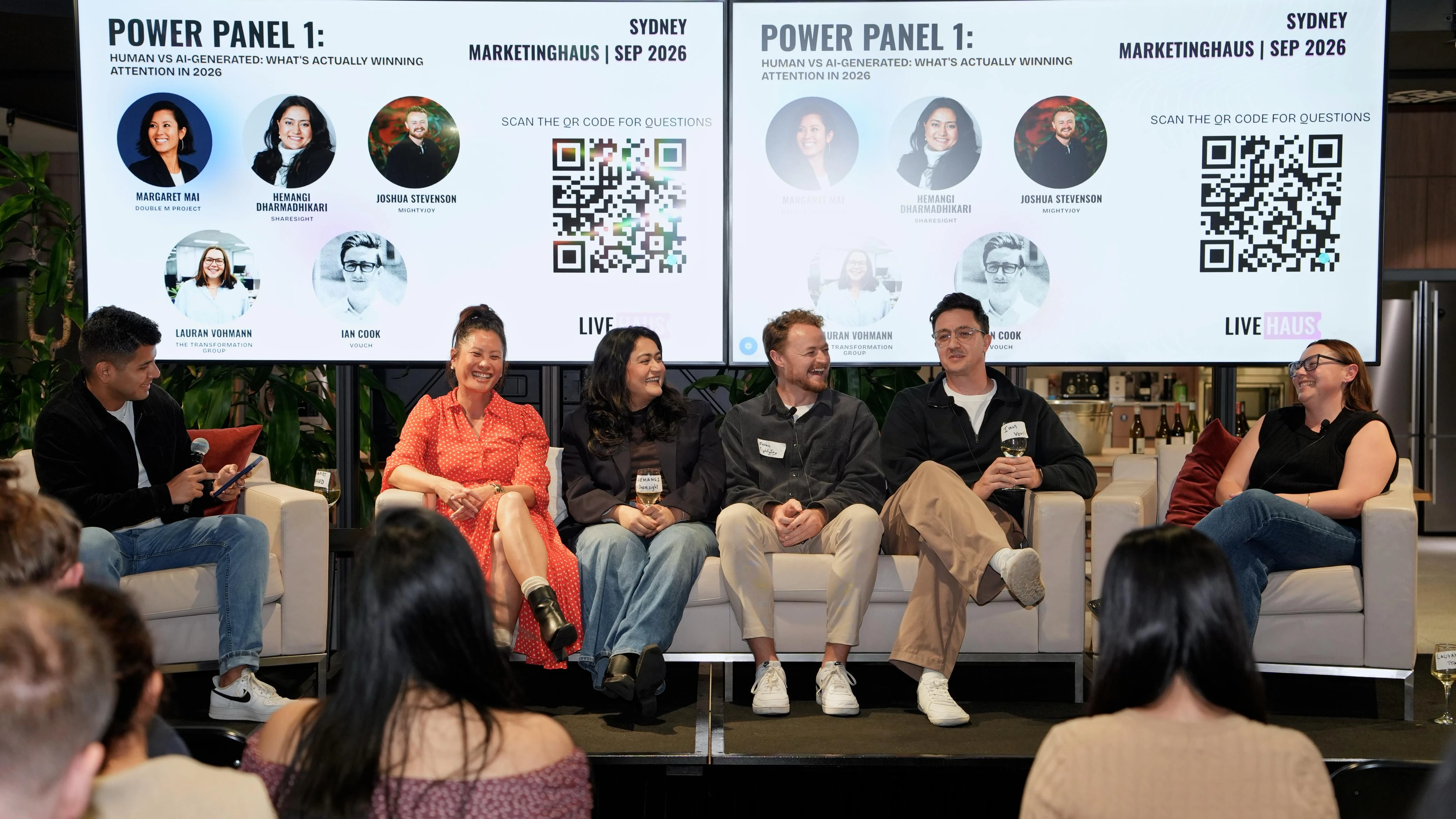
I joined a panel of influencers and marketers in Sydney to talk about whether human or AI-made work is winning attention. One question from the audience has stuck with me since.
Near the end of the panel, an academic in the audience asked how he should talk to his students about using AI. I didn’t really have an answer for him on the night, which is awkward when you’re the one on stage holding a microphone. I’ve had a week to think about it, and I’ll come back to him at the end.
The panel was called “Human vs AI-Generated: What’s Actually Winning Attention in 2026,” and it was part of the first MarketingHaus event in Sydney, run by LiveHaus. I shared the stage with Margaret Mai, Hemangi Dharmadhikari, Lauran Vohmann and Joshua Stevenson. They were influencers and marketers from a whole range of backgrounds, and I was the only creative. Before it started, I didn’t know what level the conversation would be pitched at. It turned out to be a good mix, and the time flew by.
What surprised me most was that the discussion felt about six months behind where I expected it to be. That says more about me than about the room. I’m close to AI every day because my work demands it, and in my corner of the industry every new release seems to come for a different skill. This week, apparently, it was motion graphics. That was no surprise, given Opus 5.5 had just landed and everyone was posting examples.[1] I assume there’s a rota somewhere.
Outside that bubble, things look very different. People in finance and similar sectors rarely get closer to AI than a heavily locked-down Copilot. One woman in the audience had never used it at all. She was setting up a nonprofit and wanted to know where to even start, and I found myself more interested in her world than my own.
Most of us on stage agreed on one thing. AI is an enabler. It’s a tool that can genuinely help with workflows, but it should never set the direction. If it’s leading, someone else is probably being led to exactly the same place as you.
We also agreed that you have to put as much of yourself into AI as you want to get back out of it. If you don’t, it pulls from the middle. It rarely makes really bad work and rarely makes really good work, so you end up in the competent, vanilla centre. We don’t fully know what’s in there, either. Pixel-for-pixel copies of existing work have come out of these tools, which is sketchy to say the least. I saw one on Instagram where a creative asked for a fabric effect and got back the exact effect from a video he’d made years earlier.[2] A very expensive lost property office had essentially reunited him with his own work.
So don’t just ask it to write you something. Write it yourself as well as you can, or dictate it like I’m doing right now,[3] and then ask it to tidy up the obvious mistakes.
That’s the distinction I drew on stage between generative AI and editorial AI. Generative AI builds something from scratch out of a black box of who-knows-what. Editorial AI starts with raw material from a person and helps shape it, which makes it the safer place to use it.
I should say I’m not a sceptic. I use it every day. On the day of the panel I’d been using it to produce image layouts, which it’s now genuinely good at. I also talked about a workflow where I wanted an image of a person to look like a still frame from digital video. In about 30 minutes I’d built a plugin with Claude Code that applied a set of effects.[4] Then I tweaked it until the look was right. A year or two ago I couldn’t have done that, and AI made it really easy.
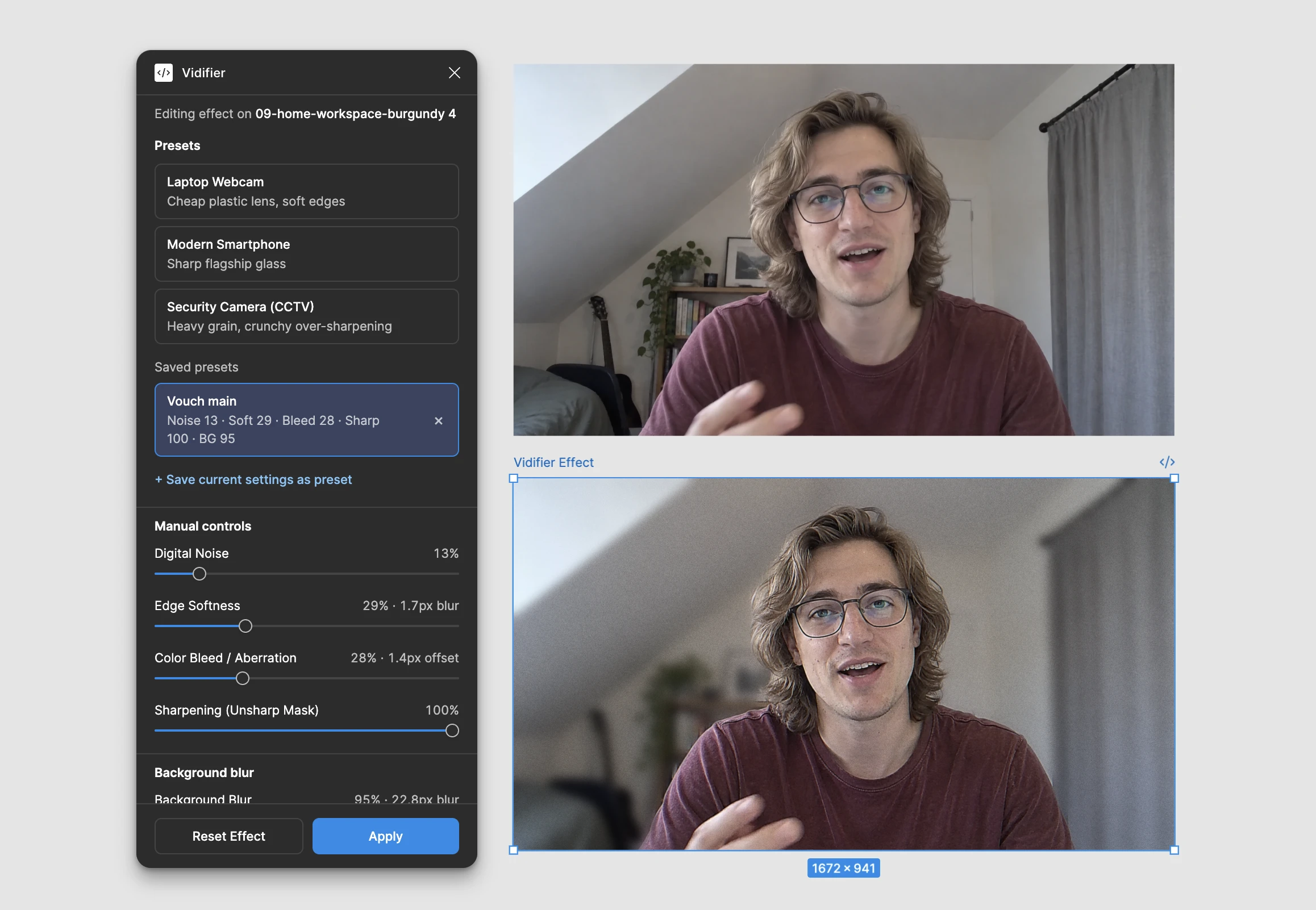 The original on top, the Vidifier version underneath.
Even so, I think it’s difficult to use AI in any final creative output right now, visual or written, because AI has a brand problem of its own. People’s feelings about a piece of work can flip the moment they find out AI made it. Plenty won’t accept it, while plenty of others genuinely don’t care. Slop is part of AI’s brand at the moment, and if you use AI for your own brand, you inherit some of the slop.
People tend to ask whether it’s lazy or deceitful. I think a lot of that comes from not knowing who’s actually behind the work. It isn’t fully, authentically human, and that carries a stigma. So even when it’s used ethically and creatively, there’s still a risk.
I had a great time with my fellow panellists, and talking to people afterwards. There was plenty of optimism in the room, but also a lot of fear and anxiety, and that can’t be denied. It’s worth coming back to in a couple of months to see how much has shifted. By then motion graphics will probably have been attacked twice.
Back to the academic, then. What I’d tell him now is that this is all so new that any fallout, if there’s going to be any, hasn’t really happened yet. My hunch is that in five years we’ll have a handful of genuinely juicy case studies where AI got someone into serious trouble, and plenty more where it clearly helped. Until then, we’re all writing those case studies. We just don’t know which kind yet.
Here’s one example. Just search Twitter for Opus 5.5 motion graphics. The quality has really dropped off and flattened out. ↩︎
Here’s the reel, so you can judge for yourself. ↩︎
For the record, I dictated this post and then had AI tidy it up, which is the editorial approach described in the next paragraph. ↩︎
I called it Vidifier. Naming things is still a human job. ↩︎